The Importance of Skin Checks & Early Detection
Preventative methods, including hats and sunscreen, can dramatically reduce the number of skin cancers contracted. Early detection through skin checks can ensure that the remaining skin cancers are successfully treated.

DermScreen
Australia has one of the highest rates of skin cancer in the world. This is due to
both the higher ambient levels of ultraviolet light, and the predominantly
outdoor lifestyle. About two-thirds of the Australian population will be
diagnosed with a skin cancer at some point in their lives. 95% of these cancers
are caused by UV sunlight exposure. Preventative methods, including hats and
sunscreen, can dramatically reduce the number of skin cancers contracted. Early
detection through skin checks can ensure that the remaining skin cancers are
successfully treated.
DermScreen Skin Check Sydney CBD
DermScreen was established in 2022 by a group of Australian dermatologists.
Recognising the widespread problems with skin cancer in this country, we
decided to improve melanoma survival rates through early detection. We do this
through humanised technology, providing affordable, accessible, convenient
skin screening in our three Sydney clinics. Visit us at Randwick, Bondi Junction
and Sydney CBD.
How Often Should You Have a Skin Check in Australia?
For most adults, a professional skin check is recommended at least once a year.
A general doctor or a dermatologist can examine the skin thoroughly and
identify anything that looks suspicious. Individuals with a higher risk of skin
cancers, those with fair skin that burns easily, or who have a family history of
similar problems, should get tested twice per year.
Higher Risk of Skin Cancer:
- Fair skin that burns before it tans.
- Skin with a lot of moles
- A family history of melanoma or similar skin problems.
- You have had melanoma or similar problems before
- Significant Sun exposure when younger
Conduct a Personal Check
A self-examination for any skin issues is recommended every three months.
Stand in a well-lit room in front of a full-length mirror and check your entire
body from head to toe. Use a mirror or ask a partner to help check hard-to-see
areas such as your back and scalp. Skin cancers can appear on areas not usually
exposed to the sun, including the soles of the feet, between fingers and toes, and
under nails. Take photos with a smartphone, so you can look for changes over
time. Any changes, new moles, a mole that changes shape, or anything that
looks unusual, should be immediately referred to a doctor.
What to Expect at a Digital Skin Check
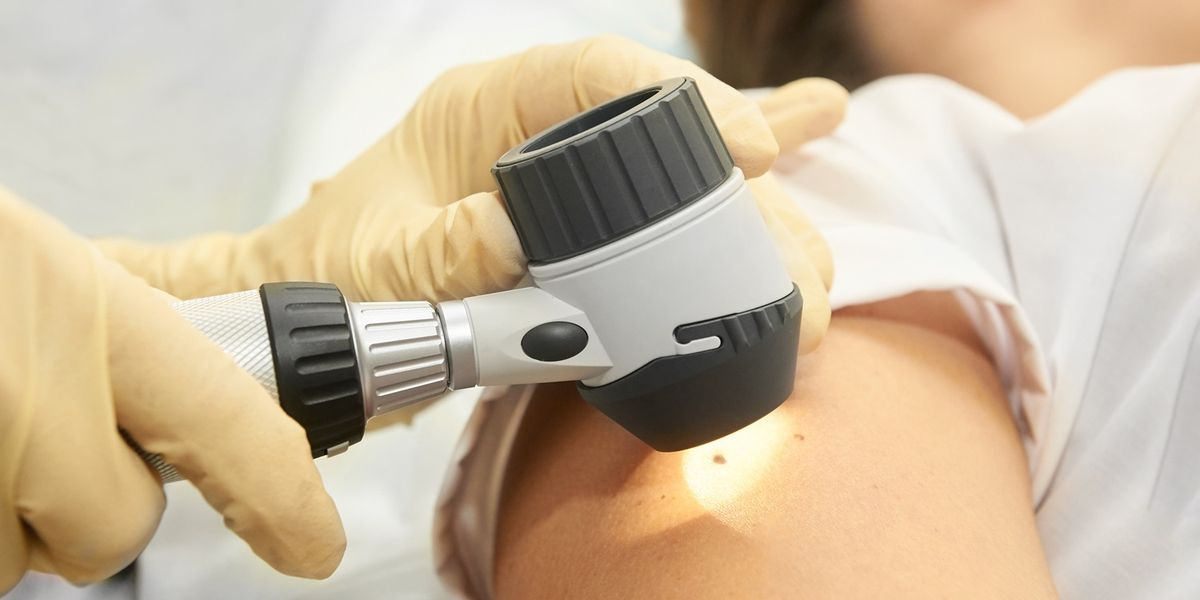
Digital technology is being used to detect skin problems, including melanomas.
Full-body photographs with high-resolution cameras allow professionals to
monitor any changes. A dermatoscope will allow examination beneath the skin,
to look for potential issues in their earliest stages. These technologies increase
diagnostic accuracy and can reduce unnecessary biopsies while ensuring that
true malignancies are identified early.
The ABCDEs of Melanoma: What to Look For:
Melanomas may be black, brown, pink, skin-coloured or a mix of shades.
The ABCDE guide is a practical way to assess moles during self-examination:
Asymmetry: The mole has an odd shape, not symmetrical.
Border: The edges are irregular or blurred. No neat border with the surrounding
skin.
Colour: Uneven in colour, perhaps combinations of brown, black, tan, or areas
of red, white, grey or blue.
Diameter: Larger moles, more than 6mm across are more suspicious, though
smaller moles can also be cancerous.
Evolving: Any change in size, shape, colour, texture, or the development of
new symptoms such as bleeding or itching.
When to Worry About a Mole: Warning Signs You Shouldn’t Ignore
It is important to understand that skin cancers rarely feel painful. They are more
often seen than felt. So, they can easily go unnoticed, even when they are
serious. Basal cell carcinoma, the most common and least dangerous type, may
appear as a pearly lump or dry, scaly area that does not fully heal. Squamous
cell carcinoma may present as a thickened, red, scaly patch that bleeds easily or
crusts.
Although many skin spots are harmless, it can be difficult to distinguish
between normal sun damage and cancer. When in doubt, seek medical advice.
Certain changes should prompt medical review:
- A new mole appearing in adulthood, particularly after age 25.
- A mole that grows quickly.
- Any unusual mole that is different from other moles.
- A spot that itches, burns, bleeds or weeps.
- A sore that does not heal within a few weeks.
- A mole that becomes raised, rough, scaly or ulcerated.
Why Early Detection of Skin Cancer Is So Important.
Melanoma is especially dangerous because it can spread to other parts of the
body. However, early detection and treatment greatly reduce the risk of the
cancer spreading. In many cases, early-stage issues can be cured with relatively
simple surgery. The survival rate when detected early is over 90%.
Summing Up
Early detection prevents skin cancer from progressing and spreading through
the body. The treatments for skin cancer are generally simpler and less invasive
when the problem is caught early on. Using sun protection, conducting personal
skin examinations, and having regular professional checks, provide the best
defence. It is important to talk to your doctor about your personal level of risk
and to develop a routine for monitoring your skin. Skin cancer can be deadly,
but it is also highly treatable when found early. Becoming familiar with your
skin and acting promptly on any changes can significantly improve outcomes
and, in some cases, save your life.