Skin conditions that might become melanoma
Melanoma is a serious form of skin cancer. It is especially common in Australia because of our country’s high ultraviolet (UV) exposure levels. Melanomas can develop from pre-existing moles on the skin, but they can quite often develop from otherwise normal-looking skin.

DermScreen
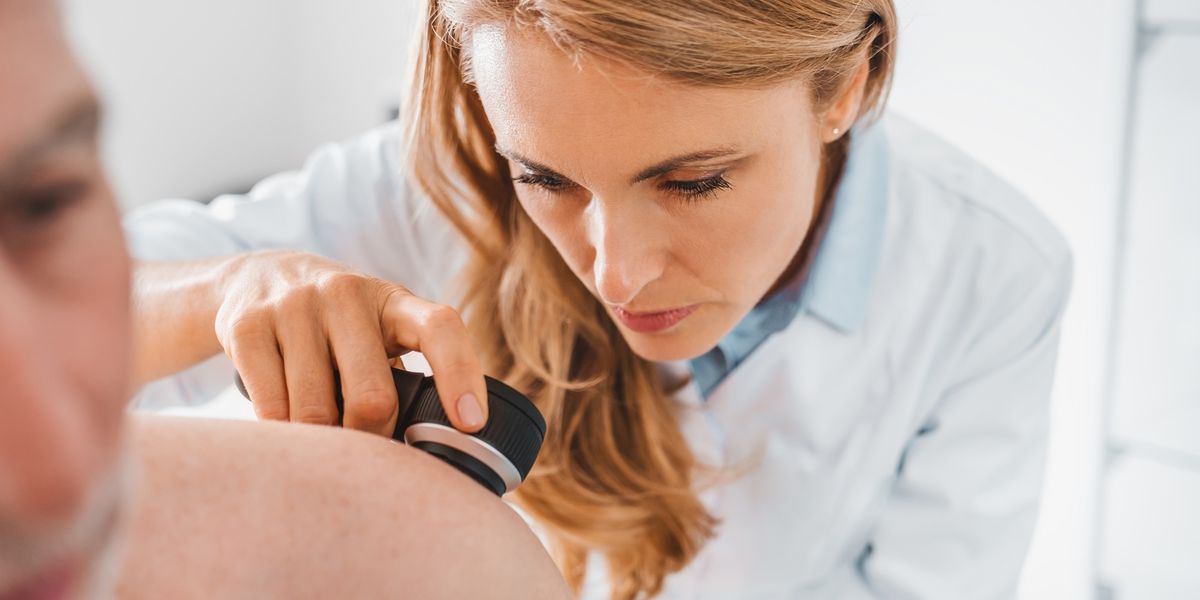
Melanoma is a serious form of skin cancer. It is especially common in Australia because of our country’s high ultraviolet (UV) exposure levels. Melanomas can develop from pre-existing moles on the skin, but they can quite often develop from otherwise normal-looking skin.
What should I watch out for?
Many common skin growths and spots are harmless, but some are a melanoma risk. And there can be confusion when a harmless skin lesion and a dangerous melanoma look quite similar. Such situations should be monitored carefully. Understanding the difference between higher-risk lesions and generally harmless skin lesions or blemishes is important for early detection.
Understanding melanoma risk
Around 20–30% of melanomas arise from existing moles, while approximately 70–80% appear as new spots or lesions. Melanoma can occur almost anywhere on the body, including areas rarely exposed to the sun, such as under nails, on the soles of the feet, or inside the mouth. Australia and New Zealand have the highest melanoma rates in the world. Risk increases with UV exposure, especially repeated sunburns during childhood and adolescence.
Who is at higher risk of melanoma?
- People with fair skin that burns easily
- Individuals with red or blonde hair
- People with blue or green eyes
- People with numerous moles on their skin
- Those with a family history of melanoma
- Those with a previous melanoma diagnosis
- Anybody with a history of heavy sun exposure or of blistering sunburn
What are moles?
Moles (Naevi) are very common and are usually harmless. Most adults have between 10 and 40 moles. Typical moles are round or oval, evenly coloured, and smaller than 6 mm.
However, some moles carry a higher melanoma risk.
Atypical moles (dysplastic naevi)
These are considered one of the more important warning signs for melanoma risk. They are usually:
- Larger than ordinary moles
- Irregular in shape
- Uneven in colour
- Poorly defined around the edges
People with many atypical moles have a significantly increased melanoma risk. While most dysplastic naevi never become cancerous, they deserve close monitoring often with total body photography.
Congenital moles
These are moles present at birth. Small congenital moles usually carry little risk, but very large congenital moles have a higher lifetime chance of becoming melanoma. We need to look for suspicious changes.
Dermatologists often use the ABCDE guide:
A – Asymmetry: one half differs from the other.
B – Border: uneven or blurred edges.
C – Colour: multiple colours or patchy colour.
D – Diameter: larger than 6 mm.
E – Evolving: changing shape, colour, size, itching, bleeding, or crusting.
Any changing mole should be examined by a doctor.
Freckles
Freckles are small, flat pigmented spots caused by a combination of genetics and sun exposure. They are more common in fair-skinned people and often become darker when exposed to the sun, especially in summer. The freckles themselves are essentially harmless and do not generally become melanoma. However, the type of skin that has freckles is more sensitive to the sun and UV light, so people with heavy freckling have a higher overall risk of developing melanoma. Freckles can sometimes make it harder to identify suspicious lesions because they create a crowded appearance on the skin. Regular skin checks are important for people with many freckles.
Lentigines and solar lentigines
Lentigines are flat brown spots caused by increased pigment production. Often called sunspots or age spots, solar lentigines are very common in older Australians due to long-term UV exposure. They usually appear on the face, hands, shoulders, and arms. Solar lentigines themselves are usually benign, but they indicate that the individual has had higher than acceptable sun exposure, which increases melanoma risk overall.
Lentigo maligna
Lentigo maligna is an early form of melanoma confined to the top layer of the skin. Without treatment, it can progress to invasive melanoma. It often appears as a slow-growing irregular dark patch on sun-damaged skin, particularly on the face or neck of older adults. Because lentigo maligna can resemble ordinary solar lentigines in its early stages, any changing or irregular pigmented patch should be assessed professionally.
Seborrhoeic keratoses
Seborrhoeic keratoses are extremely common benign skin growths that usually appear in middle-aged and older adults. They often look:
- Waxy
- Raised
- Brown, black, or tan
- “Stuck on” to the skin surface
These growths are generally harmless and do not turn into melanoma. However, seborrhoeic keratoses can sometimes resemble melanoma, especially when they become dark or irritated. In some cases, melanoma may also mimic a seborrhoeic keratosis. Because of this, new or changing lesions should not simply be dismissed as harmless ageing spots without examination.
Skin tags
Skin tags are small, soft growths that commonly occur in skin folds such as the neck, armpits, groin, or eyelids. An actual skin tag is essentially benign and not typically associated with melanoma development. But there are other uncommon skin lesions that resemble skin tags that might be cancerous. If a supposed skin tag changes colour, bleeds, or grows rapidly, it should be checked to confirm it is not another type of lesion.
Sebaceous hyperplasia
Sebaceous hyperplasia is an enlargement of oil glands, commonly appearing as small yellowish or flesh-coloured bumps on the face. These bumps are harmless and not considered pre-cancerous. They are often mistaken for other conditions because they may have a central indentation. Although sebaceous hyperplasia does not become melanoma, any unusual or changing facial lesion should still be assessed if the diagnosis is uncertain and can sometimes mimic other types of skin cancers such as basal cell carcinoma.
Cherry angiomas
Cherry angiomas are small, bright red growths made of tiny blood vessels. They become more common as we age, and are prone to bleeding if scratched. True cherry angiomas are benign and not associated with melanoma risk. However, it can be hard to distinguish between a cherry angioma and a lesion that actually is cancerous. Any unusual vascular-looking lesion that changes rapidly or looks different from others should be professionally examined.
Which conditions are higher risk?
The following are associated with increased melanoma risk:
- Atypical moles (dysplastic naevi)
- Large congenital moles
- Lentigo maligna
- Areas of heavy sun damage
- Having large numbers of moles overall
Which conditions are usually harmless?
These are generally benign and not considered melanoma precursors:
- Ordinary freckles
- Solar lentigines (though they indicate sun damage)
- Seborrhoeic keratoses
- Skin tags
- Sebaceous hyperplasia
- Cherry angiomas
Even harmless lesions can sometimes resemble melanoma, which is why monitoring skin changes remains important.
Why early detection is important
Melanoma is highly treatable when detected early, before it spreads deeper into the skin or to other parts of the body. Australians, particularly those with fair skin or significant sun exposure, should perform regular skin checks and seek medical advice if they notice any of the following:
- A new spot
- A changing mole
- An “ugly duckling” lesion that looks different from surrounding spots
- Bleeding, itching, or crusting lesions
- Dark streaks under nails
- Unusual spots on palms, soles, or scalp
Book a skin check at DermScreen
Regular professional skin examinations are important for everyone, particularly those with multiple moles, atypical moles, or a personal or family history of melanoma. Protecting your skin from UV exposure — using SPF50+ sunscreen, broad-brimmed hats, sunglasses, and shade — remains the best way to reduce melanoma risk in Australia.
If you’re overdue for a professional skin check, book an appointment at one of our three Sydney clinics — Randwick, Bondi Junction, or Sydney CBD.